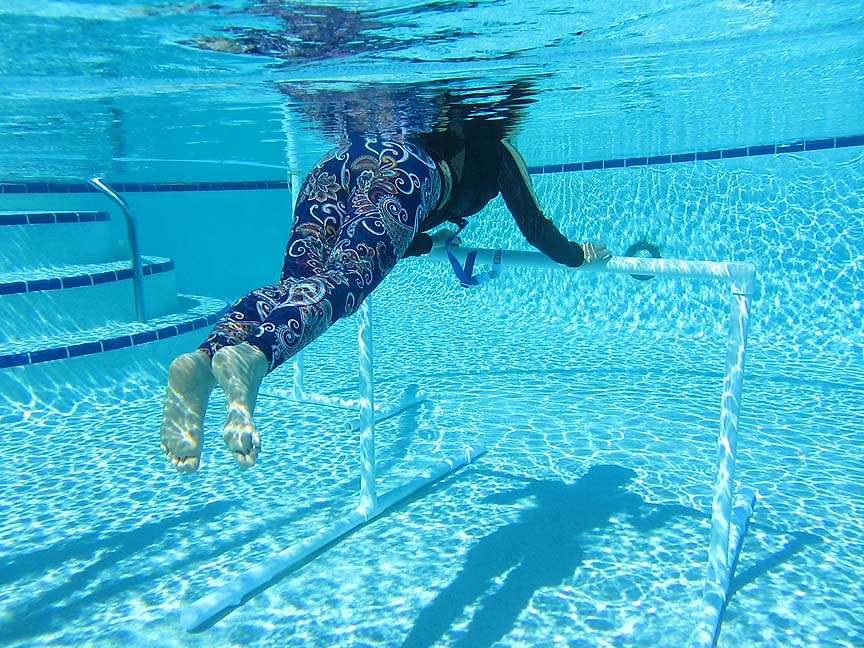

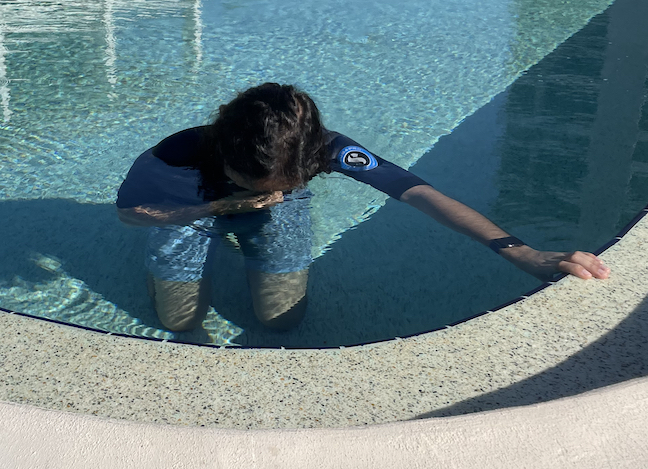

This is what’s possible with Miracle Swimming. The surfing was learned on holiday the week after finishing 5 courses with us. No one had ever done all our Core Courses in one month before. Standing ovation, Vernon!
You can be 100% successful with adult students who are afraid in deep water. Become trained and qualified, prepared and confident.
Read CNN.com Opinion by Melon Dash
See the videos at the left to watch one student’s 33-day path from fear in a pool to freedom in the ocean.
Everyone on your aquatics staff needs this information. It is the key to being 100% successful with afraid adults. An instructor who cannot bring an afraid adult to freedom in deep water is not qualified to teach afraid adults.
We believe that our teaching system is the key that unlocks all the steps to end preventable drowning worldwide.
The Miracle Swimming Movement is a 42 year-old system* that teaches adults who are terrified or afraid in deep water how to be peaceful in deep water without learning strokes. It literally cannot fail.
It is a crusade to show traditional swim instruction agencies that their system puts the cart before the horse, preventing afraid adults from becoming safe.
Afraid adults can easily learn to swim if they are met where they are and give relevant, correct instructions.


Yes. There’s a lot more to knowing how to swim than strokes. It turns out that the other stuff is more important!
The other stuff is where safety is.
What do you call someone who can do strokes in four feet of water but who won’t do them in the deep end? A non-swimmer!
A person who can swim is not afraid in deep water. Therefore, the person above can’t “swim.” S/he can stroke. She is executing a movement called “swimming” but she can’t “swim.”
Is every student who “finished lessons” at your school peaceful in deep water? Adults? Kids?
Our students from all 50 states and 18 countries took swimming lessons at home—not just once—and they were not satisfied with their progress. They went to the internet, found us, took a vacation, and got the correct ideas. They turned their swimming around.
Knowing how to swim is more than strokes. It’s peacefulness in deep water. It’s mastery of the relationship between one’s body and the water. It’s knowing how you float. And whether you float. It’s knowing what a float is. It’s not worrying about how you’ll get air.
If you teach adults who are afraid in water (half of American adults) in shallow water, and they learn freestyle but never go to deep water, and you turn them loose saying, “There you go! I’ve taught you to swim!” we believe it’s a serious error. They know they aren’t safe. And that means they can’t swim. In your heart of hearts, do you know, that, too?
It’s the same for kids. They usually learn in water over their heads, but do they learn to stop and rest indefinitely? If not, they are not yet safe. They cannot swim.
You say, “But if it works in shallow water, it’ll work in deep water.” That should be true but it’s not…because afraid students’ minds are not in synch with their bodies in deep water. They don’t understand the water. It’s the instructor’s job to teach them.
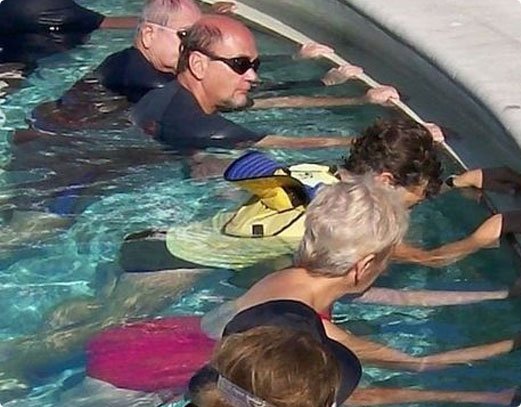
“Melon identified something that was wrong with the way adults were being taught to swim. She developed a system to teach afraid adults that has set the bar high for every aquatic agency and/or swim instructor—to visit their methods and make some adjustments to meet the needs of adults who have fear of water.”
Sue Nelson, USA Swimming
“You said so much that’s industry-disrupting. One of them was that if we’re not comfortable in deep water, we can’t swim. That hit home.”
Eric Hill, Miracle Swimming “book graduate”
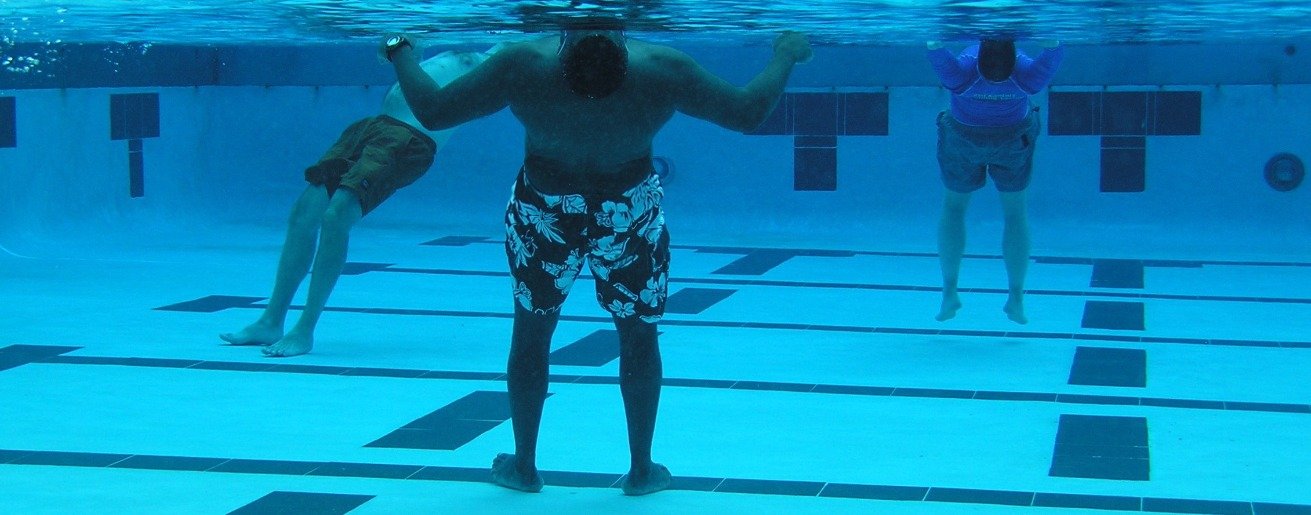
Watch a free masterclass for instructors to learn the basics of teaching afraid adults to swim. This material has never been made public. 45 minutes. Pay special attention to the segments on “Instant Insanity” and Statue of Liberty.
(Updated video coming Fall, 2024)
Melon (nee Mary Ellen) Dash, founder of Miracle Swimming and Miracle Swimming School for Adults has been trained by ~6,000 afraid adult students.
She’s taught afraid adult non-swimmers exclusively, full time, nonstop for over forty years. She wrote a book about what her students taught her: the solution. If there is only one solution, this is it. You will recognize it when you see it. Whereas her students used to “lose it” in deep water, they now “keep it.”
Dash is a nationally-ranked masters swimmer. She developed a new paradigm for teaching and learning in 1983: The 5 Circles Teaching Method.
Instructors worldwide have been licensed to teach this unimpeachable system.
Adults are afraid because their parents were afraid, or they were hurt by a water experience, or they were taught incorrectly.
The incorrect teaching must end. We believe that instructors of adults must be 100% successful teaching afraid students to overcome fear.
Dash has been featured in The New York Times, Wall Street Journal, USA Today, NPR, NBC’s Today Show, CNN.com OpEd, CNN’s Headline News, Psychology Today, Real Simple, Elle, SNN, ABC 7 The View, Tampa Bay Times, and dozens more.
“You must be horizontal to float correctly.” If you tell a fit man or woman that to float correctly they must be horizontal, how do you explain it? If their feet go to the bottom in four feet of water when they lie down on the water—which is their natural float—(the water is doing all the work) and you tell them their feet have to be at the surface, you are asking them to struggle to lift their feet up. For what purpose? It pulls their chins down and prevents them from learning. The swim team doesn’t float horizontally.
Floating is not meant to be a struggle. “Feet on the bottom and face in the air” is a perfectly good float.
An adult or child whose feet go to the bottom in shallow water is simply demonstrating physics: dense (muscular) legs don’t float. But upper bodies with lungs, fat, or breasts float just fine.
If they try to hold their feet up, they end up in a V float which is uncomfortable, unbalanced, and unsustainable, often pulling the face under water.
Swimming students believe teachers who have a credential. Yet the believing student is often misled. This causes frustration, discouragement and failure. Distrust in traditional swimming lessons continues to grow.
Teaching misinformation prevents people from learning. But it can be fixed.
Many instructors notice that their teaching doesn’t get through to everyone. They think it’s the student’s fault. At Miracle Swimming, we’ve concluded that this is rarely the case.
You can teach a system that reaches every afraid adult every single time and produces adults who are no longer afraid in deep water…and are ecstatic. They become safe. Then, they enroll in your advanced programs.
A free Master Class for instructors to learn the basics of teaching afraid adults can be viewed at the left. This is a new presentation. Sign up for the mailing list to watch it. Unsubscribe anytime.
Adults control the family budget. They decide what the family will do and which activities their kids will participate in. Adults give kids messages about swimming. If adults can swim, those messages will be one thing. If they can’t, the messages will be something else. Ninety percent of our afraid adult students had at least one parent who was afraid. It is well-documented that there’s a higher chance that kids of swimmer-parents will learn to swim than kids of non-swimmer parents—by a longshot.
We surveyed 80 instructors and 800 afraid adults, asking them to send us their two burning questions about teaching afraid adults or learning to swim, respectively. Both groups had the same questions!
How can those instructors consider themselves qualified to teach adults?
There are three times as many adults as kids in the U.S. You’d think there would be three times as many adult swim schools. Yet there are almost none. If you knew how to be successful, you could have a good business teaching afraid adults.
If instructors could teach afraid adults with 100% success, more parents could swim.
If more parents could swim, fewer would drown. More kids would learn to swim. Fewer kids would drown. If all adults and kids could swim, the drowning rate would plummet.
The premise from the early 1900s that if we teach all kids to swim, all adults will eventually be able to swim never panned out: parents’ fear, lack of pool access, and instructors’ lack of knowledge prevented it.
There’s a climbable mountain of material to learn. It will happen one step at a time. And then we’ll have world water safety.
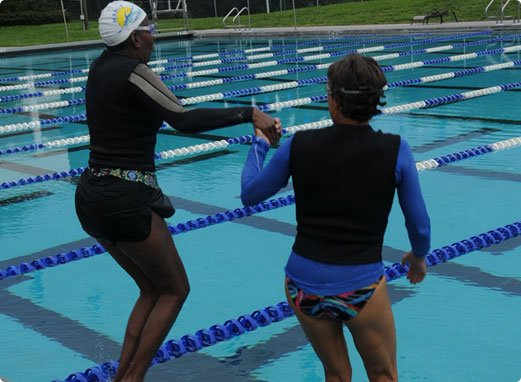
The Miracle Swimming Movement has these tenets as part of its foundation:
◈ The main purpose of learning to swim—first and foremost—is to become safe in water over one’s head.
◈ Safety in water over one’s head should be taught before strokes, treading, and other advanced water skills.
◈ To guarantee learning, comfort is non-negotiable.
◈ Every student is a natural, curious learner and learning can always be fun. There is no need for rushing, pressure, discomfort, or fear in learning.
◈ We can virtually end drowning around the world if we teach safety first to all people. Those who wish to learn efficiency as well—which comes from strokes—may learn it afterward.
◈ Learning to swim is learning to be peaceful in water over one’s head. Learning strokes is learning to be efficient in water. Safety first; efficiency later.
◈ Someone who can swim is not afraid in deep water. Someone who is not peaceful in deep water cannot swim.
◈ It’s essential to teach kids to swim. It’s even more important to teach adults to swim…first.
◈ All people of all ages can learn to swim unless they have a debilitating learning handicap.